

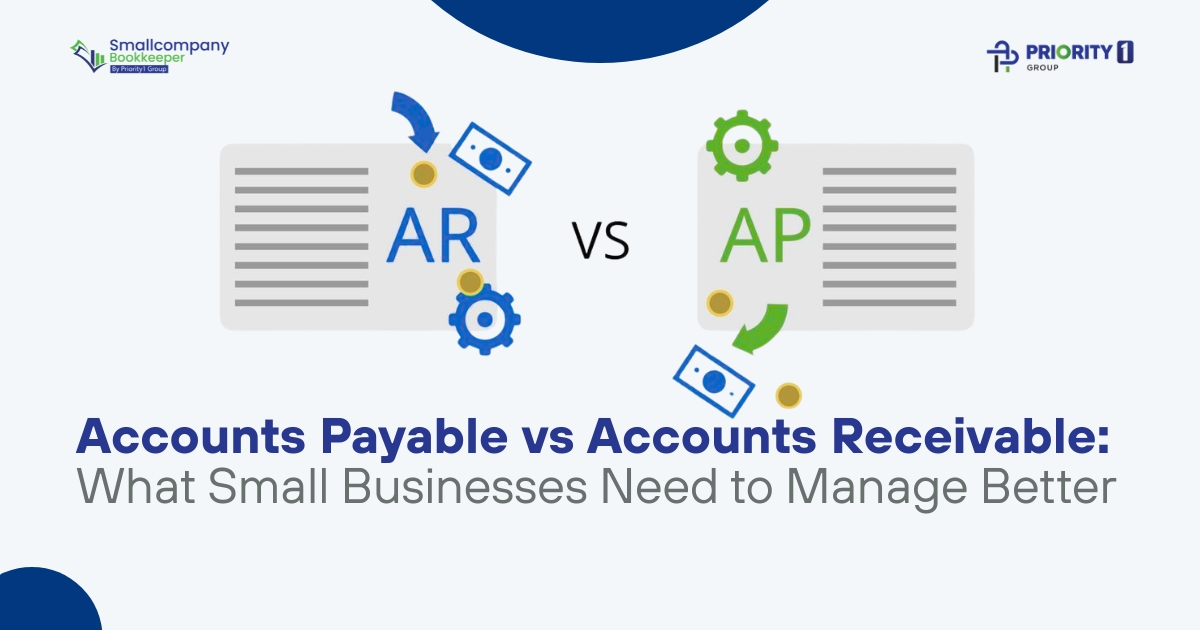
Managing finances is one of the most critical aspects of running a successful business. Yet, many small business owners struggle to clearly understand the difference between accounts payable and accounts receivable – and more importantly, how to manage both effectively.
If not handled properly, these two areas can quietly impact your cash flow, vendor relationships, and overall financial stability.
Let’s break it down in a simple, practical way so you can manage your business finances with more confidence and clarity.
Accounts payable (AP) refers to the money your business owes to suppliers, vendors, or service providers.
Whenever you purchase goods or services on credit, it becomes part of your accounts payable until the payment is made. If you want a more detailed breakdown, read Accounts Payable Explained: A Beginner’s Guide to Bookkeeping.
Accounts payable is not just about paying bills – it’s about managing your outgoing cash strategically.
If you pay too early, you may strain your cash flow. If you pay too late, you risk damaging relationships or facing penalties.
Accounts receivable (AR) refers to the money your business is owed by customers.
When you provide goods or services and allow customers to pay later, that amount becomes part of your accounts receivable.
Accounts receivable directly impacts your incoming cash.
Delayed payments can slow down your business operations, making it harder to cover expenses, pay staff, or reinvest in growth.
Aspect | Accounts Payable | Accounts Receivable |
Meaning | Money you owe | Money owed to you |
Cash Flow Impact | Outflow | Inflow |
Managed By | Paying vendors | Collecting from customers |
Risk | Late fees, damaged relationships | Cash flow delays, bad debts |
Goal | Pay on time, optimise cash | Collect faster, reduce delays |
Understanding this balance is essential. A business that manages both effectively stays financially stable and scalable.
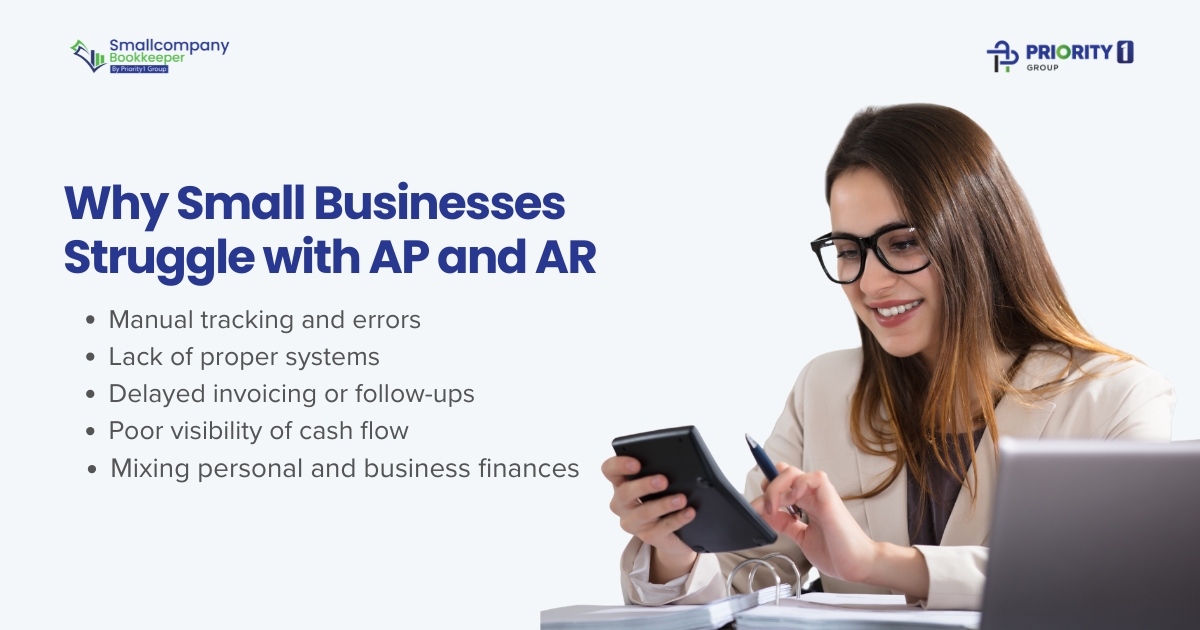
Many small businesses face challenges because of:
Without a structured approach, small gaps in financial management can quickly turn into bigger problems.
This is where having a strong small company bookkeeping system becomes essential – it creates clarity, reduces errors, and helps you stay in control of your finances.
If payments are not planned properly, your business might run out of working capital.
Late payments can damage trust and even disrupt supply chains.
Many vendors offer early payment discounts – poor management means lost savings.
Late customer payments can slow down your entire business cycle.
The longer invoices remain unpaid, the higher the risk of non-payment.
Chasing payments takes time and energy away from core business activities.
Plan payments based on due dates and cash flow availability. Businesses that need more structure in this area can explore professional accounts payable support to improve payment timing, reduce manual errors, and keep supplier obligations under control.
Use accounting software to track and schedule payments.
Stay transparent and proactive with suppliers.
Identify unnecessary costs and optimise spending.
Send invoices immediately after delivering goods or services.
Avoid confusion by defining due dates and penalties upfront.
Have a system for reminders and follow-ups. If late payments are becoming a recurring problem, professional accounts receivable support can help create a more consistent invoicing and follow-up process.
Make it easier for customers to pay you quickly.
Managing AP and AR manually might work in the early stages – but as your business grows, it becomes risky and inefficient.
This is where working with professionals or structured systems becomes valuable. For many growing businesses, working with an outsourced bookkeeper is a practical way to maintain financial accuracy without building a large in-house finance function.
Experienced Bookkeepers for Small Business help ensure:
Many businesses reach a point where managing finances internally becomes overwhelming.
That’s where Priority1 Group steps in.
With a strong understanding of Australian business requirements and financial workflows, they help streamline accounts payable and receivable processes – ensuring your business runs smoothly without operational bottlenecks.
From maintaining accurate records to supporting cash flow management, having the right backend support can make a significant difference in how confidently you operate and grow.
Think of accounts payable and receivable as two sides of the same coin.
The goal is balance.
A well-managed system ensures:
Even small errors can lead to long-term financial issues if not addressed early.
Understanding and managing accounts payable and accounts receivable is not just an accounting task – it’s a core business function. When done right, it improves cash flow, strengthens relationships, and creates a stable foundation for growth.
If your business is struggling with financial organisation, delayed payments, or unclear records, it might be time to rethink your approach. With the right systems – and the right support from experts like Priority1 Group – you can turn financial management into a strength rather than a challenge.