

Running a healthcare clinic involves much more than delivering quality patient care. Behind every organised and successful clinic is a financial system that keeps operations stable, compliant, and financially healthy. Many practice owners focus heavily on appointments, staffing, and patient outcomes while bookkeeping becomes something handled only when necessary. Over time, however, inconsistent financial management can begin affecting cash flow, reporting accuracy, and overall business performance.
Small clinics manage a wide range of financial responsibilities at once. Payroll, software subscriptions, supplier invoices, insurance payments, contractor arrangements, tax reporting, and day-to-day operational expenses all require accurate financial tracking. Without structured bookkeeping systems, it becomes difficult to understand how the clinic is performing financially or where operational pressure may be building.
This is why healthcare bookkeeping requires a more organised approach than many practice owners initially expect.
Healthcare businesses often focus so heavily on patient care that financial reporting becomes reactive instead of consistent. But when bookkeeping records are not maintained properly, practice owners lose visibility into important business areas such as operational costs, profitability, payroll expenses, and cash flow.
Many clinics experience financial stress not because revenue is low, but because financial systems are disorganised or reporting is delayed. Expenses may increase gradually without being noticed, supplier payments may become inconsistent, and tax obligations can quickly become harder to manage.
For clinics managing small company bookkeeping, maintaining accurate financial records is essential for understanding:
When bookkeeping is updated consistently, practice owners gain much stronger visibility into how the clinic is performing and where adjustments may be needed.
Cash flow management is one of the most important parts of running a healthcare business. Clinics often manage recurring operational expenses including wages, rent, software subscriptions, medical supplies, utilities, and contractor payments. Delays in payments or inconsistent bookkeeping can quickly create operational stress.
Many practice owners focus heavily on patient bookings and revenue growth while overlooking how payment timing affects the business. Even clinics with strong appointment volumes can experience financial pressure if outgoing expenses consistently exceed incoming cash flow during certain periods.
Regular bookkeeping reviews help clinics identify financial issues early before they begin affecting day-to-day operations.
Businesses across many industries face similar challenges when managing cash flow and operational expenses. This article on hospitality bookkeeping in Australia highlights how industry-specific bookkeeping practices help businesses maintain stronger financial control.
Maintaining cleaner financial systems allows clinics to:
Healthcare clinics often manage multiple staff types including reception teams, nurses, practitioners, contractors, and administrative support staff. Payroll becomes more complicated when businesses manage varying pay structures, contractor agreements, leave entitlements, and superannuation obligations.
Without accurate bookkeeping systems, payroll mistakes can affect compliance, employee trust, and reporting accuracy. Small payroll issues can quickly become larger problems if they continue unnoticed over multiple reporting periods.
This is one reason many clinics work with bookkeepers for small business to help maintain cleaner payroll systems and more organised financial reporting processes. Structured bookkeeping helps ensure wages, taxes, superannuation, and contractor payments are recorded correctly and aligned with compliance obligations.
As clinics grow operationally, many also focus on improving patient acquisition and long-term business growth. This guide on understanding your target audience explains why operational systems and business growth strategies often need to work together.
Businesses that maintain accurate payroll and reporting systems generally experience smoother BAS reporting, stronger financial visibility, and fewer compliance-related issues over time.
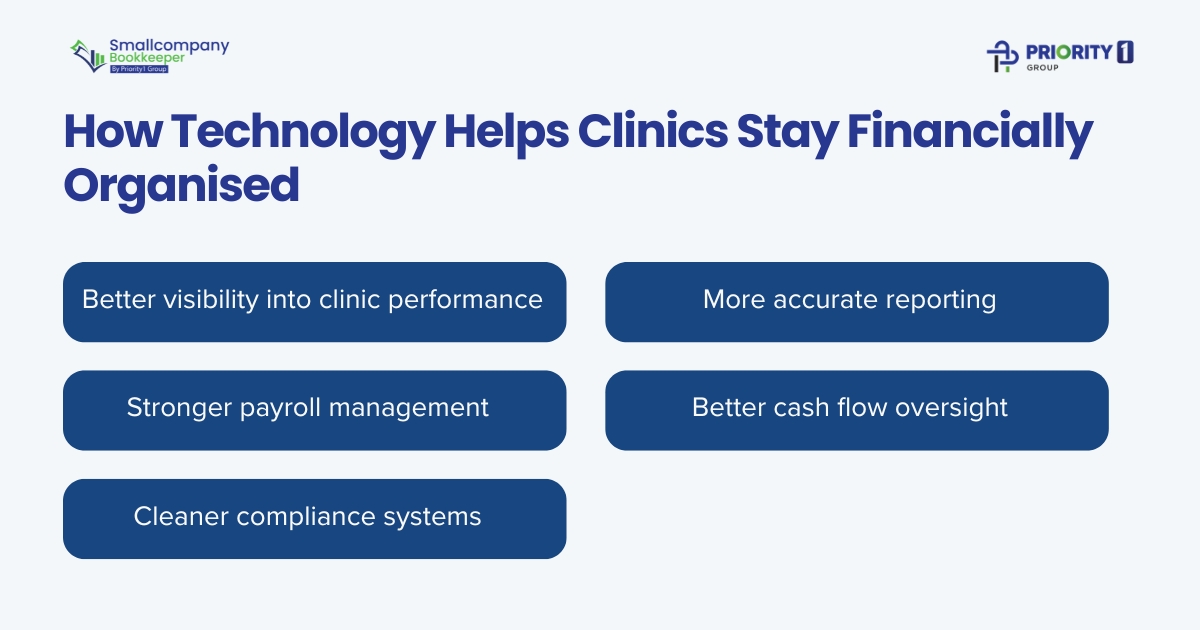
Cloud-based bookkeeping systems have significantly improved financial management for healthcare businesses. Modern software allows clinics to automate reconciliation, manage invoices, generate reports, and maintain more organised financial records.
For clinics using QuickBooks, working with a QuickBooks Bookkeeper can help ensure financial systems are configured properly and maintained consistently. This improves reporting accuracy and reduces the likelihood of bookkeeping errors creating operational issues later.
However, software alone does not solve financial problems. Businesses still need structured processes for reviewing reports, reconciling transactions, and monitoring expenses regularly.
Clinics that build consistent financial habits usually gain:
Over time, these improvements create stronger operational control and more confidence in financial decision-making.
As clinics expand, compliance responsibilities increase significantly. GST reporting, BAS lodgement, payroll obligations, superannuation payments, and contractor documentation all require accurate records and consistent reporting processes.
When bookkeeping becomes reactive instead of organised, compliance problems often follow. Small reporting mistakes may continue unnoticed for months before creating penalties or operational stress.
Healthcare clinics that maintain cleaner bookkeeping systems usually experience much smoother reporting periods because financial information is already structured and regularly reviewed. This becomes especially important as clinics add more practitioners, increase payroll complexity, or expand into additional service areas.
Consistent bookkeeping also helps clinics prepare more effectively for audits, financial reviews, and future business growth opportunities.
As healthcare clinics become busier, financial administration often becomes harder to manage internally. More appointments, more payroll activity, and more compliance requirements increase the need for organised bookkeeping systems.
There is a company called Priority1 Group that helps Australian businesses improve bookkeeping structure through reconciliation support, payroll reporting, financial organisation, and compliance-focused processes. By helping clinics maintain clearer records and stronger reporting systems, they support better operational visibility and financial control.
Professional bookkeeping support can help healthcare clinics:
Most importantly, it allows clinic owners to spend more time focusing on patient care instead of constantly reacting to financial administration issues.
Healthcare bookkeeping for small clinics requires much more than occasional transaction recording and tax reporting. Clinics need accurate payroll systems, organised financial reporting, reliable cash flow management, and structured compliance processes to maintain operational stability.
Without consistent bookkeeping systems, financial issues can quietly build over time and begin affecting business performance. But when records are maintained properly and reviewed consistently, clinics gain stronger visibility into profitability, expenses, and overall operational health.
If your clinic is struggling with financial organisation, reporting consistency, or growing compliance pressure, working with a team like Priority1 Group can help create more structured bookkeeping systems that support better financial visibility, stronger compliance management, and smarter business decisions.