

Being a sole trader in Australia comes with its own set of responsibilities, and one of the most crucial is ensuring that your finances are in order. If you’re managing your own business, it can often feel overwhelming, especially when it comes to bookkeeping. However, bookkeeping doesn’t have to be a burden if you understand what you need to track, claim, and clean up. In this blog, we’ll walk you through the essentials of sole trader bookkeeping in Australia, the key areas to track, common claims you can make, and how to clean up your finances so that you can run a smoother, more efficient operation.
In Australia, a sole trader is someone who runs a business on their own, which means you’re personally responsible for the business’s finances. As a sole trader, you need to keep track of all your income and expenses for tax purposes. This isn’t just to ensure compliance; it also helps you make informed decisions about the future of your business.
Small company bookkeeping can be quite straightforward if you follow a few basic principles and maintain regular routines. Good bookkeeping practices ensure that you’re prepared for your Business Activity Statement (BAS), tax time, and any future business growth. Whether you’re a freelancer, contractor, or small business owner, getting your bookkeeping in order should be a top priority.
As a sole trader, there are several key financial areas you need to track to keep your business running smoothly and ensure you’re staying compliant with Australian tax regulations.
You should track all your income from your business activities, whether it’s from services, products, or any other form of revenue. This includes payments received from clients, customers, or any other business transactions.
Using accounting software can help automate this process and make it easier to track. It’s important to ensure that every dollar earned is recorded to give you an accurate view of your revenue.
As a sole trader, you can claim a variety of business-related expenses to reduce your taxable income. However, for this to be accurate, you need to keep detailed records of your business expenses. These can include:
Tracking your expenses diligently not only keeps you compliant but also ensures that you claim the maximum allowable deductions at tax time.
If your annual turnover exceeds the GST registration threshold (currently $75,000), you must register for GST. Once registered, you are required to charge GST on your sales and pay GST on your purchases. It’s important to track the GST you collect from clients and the GST you pay on expenses, so you can report and pay the correct amount to the Australian Taxation Office (ATO).
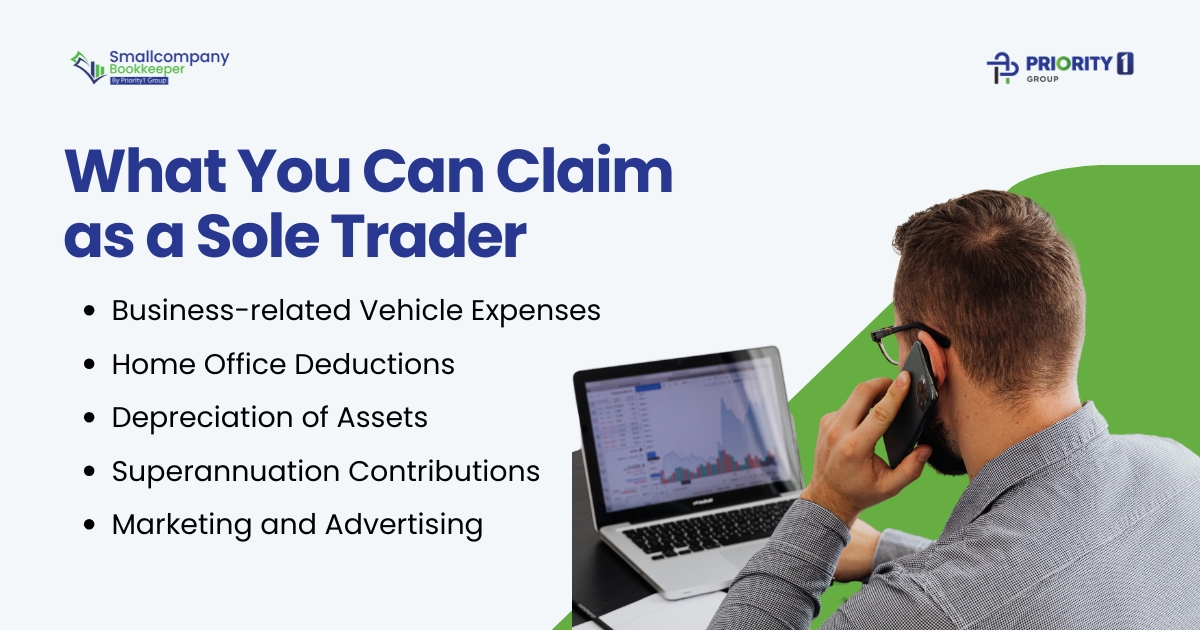
Sole traders in Australia can claim a wide range of expenses to reduce their taxable income. The key to maximising these claims is to track everything thoroughly and keep your receipts and invoices. Below are some of the most common claims sole traders can make:
If you use your vehicle for business purposes, you can claim vehicle expenses. The two most common methods for claiming vehicle expenses are the logbook method or the cents per kilometre method.
Under the logbook method, you track the percentage of time the vehicle is used for business purposes and claim that percentage of the total vehicle expenses (fuel, repairs, insurance, etc.). The cents per kilometre method is simpler but is limited to 5,000 kilometres per year.
If you work from home, you can claim deductions for the portion of your home used for business. This can include rent, electricity, internet, phone, and office supplies. You need to calculate the percentage of your home used for business activities to determine the amount you can claim.
If you buy significant assets for your business, like computers or machinery, you can claim depreciation. Depreciation allows you to claim a portion of the cost of the asset each year over its useful life. This reduces your taxable income and, therefore, your tax liability.
As a sole trader, you’re responsible for your own superannuation. While not mandatory, contributing to your superannuation helps secure your financial future. These contributions can be claimed as a tax deduction.
Any money spent on advertising your business, whether through online ads, flyers, or signage, can be claimed as a business expense. It’s important to keep all receipts related to marketing expenses to ensure you don’t miss out on these deductions.
A clean, well-maintained set of books can save you from unnecessary stress at tax time. If your bookkeeping has become messy or outdated, it’s time to clean it up. Here’s how:
Ensure that all your invoices, receipts, and financial records are neatly organised and easily accessible. This will make it easier to prepare your tax return and BAS preparation. If you’ve been relying on paper records, it might be time to switch to an electronic system.
Modern bookkeeping software like Xero, MYOB, or QuickBooks can help streamline your record-keeping. These platforms allow you to track your income and expenses in real-time and automatically reconcile your bank accounts.
Reconciliation is the process of ensuring that your records match your bank and credit card statements. Doing this monthly will help you identify discrepancies early and prevent errors from compounding. This step is crucial for ensuring that your business’s financial health is accurately reflected in your records.
If your bookkeeping feels overwhelming, consider seeking professional help. Many bookkeepers for small business offer services that can help you clean up your books, get back on track, and even offer advice on how to optimise your bookkeeping system going forward. Priority1 Group is a trusted provider for small business owners across Australia, helping you stay organised, compliant, and focused on growth.
As a sole trader, handling everything yourself can quickly become a burden. Outsourcing your bookkeeping to a reliable small business bookkeeping companies can help you stay organised and save time. Professional bookkeepers help sole traders manage their finances more effectively, allowing them to focus on their core business. For additional tips, read this helpful post on bookkeeping for startups.
Whether you need help setting up a solid bookkeeping system, managing monthly reporting, or ensuring compliance with tax regulations, professional bookkeeping support ensures your financial records are accurate and timely.
Bookkeeping is a critical part of managing a sole trader business in Australia. Keeping track of your income, expenses, and claims is essential for staying compliant and making informed decisions. By implementing a solid bookkeeping system, you can make the most of tax deductions, maintain a clear financial picture, and ultimately grow your business.
If you need help staying on top of your bookkeeping, Priority1 Group offers expert support to help sole traders and small business owners set up efficient systems, manage important financial data, and keep compliant. Whether you’re just starting or scaling, professional bookkeeping services help ensure that your business remains financially healthy, organised, and ready for success.