


Running a retail business is about far more than stocking shelves and serving customers. Behind every successful small store is a financial system that keeps operations stable, inventory moving, and cash flow under control. Yet many retail businesses struggle not because sales are low, but because their bookkeeping systems don’t provide enough visibility into where the money is actually going.
Retail businesses face unique financial challenges. Seasonal demand, supplier payments, inventory purchases, staffing costs, and changing customer behaviour can all impact cash flow quickly. Without accurate bookkeeping, these shifts become difficult to manage, making it harder to plan ahead or respond to financial pressure early.
This is why strong bookkeeping practices are essential for small retail stores that want better financial control and long-term stability.
Many retail business owners focus heavily on sales numbers, but sales alone do not guarantee financial stability. A store can generate strong revenue while still struggling with cash flow problems if expenses, inventory, or supplier payments are not managed properly.
Cash flow is what keeps the business operating day-to-day. It affects your ability to:
Without proper visibility into your cash position, even profitable businesses can experience financial pressure.
This is where small company bookkeeping becomes important. Clean and consistent financial records help retail businesses understand not only how much money is coming in, but also how much is actually available to operate the business effectively.
One of the biggest financial challenges in retail is inventory management. Overstocking ties up cash unnecessarily, while understocking can lead to missed sales opportunities.
Retail bookkeeping should work closely with inventory tracking so business owners can understand:
When inventory records and bookkeeping systems are disconnected, financial reports become less reliable. Businesses may appear profitable on paper while carrying excess stock that impacts cash flow behind the scenes.
Regular inventory reviews combined with accurate bookkeeping help create a clearer picture of your financial health.
Retail stores often have more operating expenses than expected. Rent, utilities, supplier invoices, packaging, merchant fees, marketing, and wages can quickly reduce margins if they are not tracked properly.
One common mistake is delaying expense recording until the end of the month. This creates gaps in visibility and makes financial decisions reactive rather than proactive.
A better approach is to maintain a consistent bookkeeping routine:
If you want to understand how consistent bookkeeping habits improve financial visibility, this guide on outsourcing bookkeeping for small businesses explains how structured systems support cleaner financial management.
Modern bookkeeping tools make it easier for retail businesses to stay organised and reduce manual work. Cloud-based systems provide real-time visibility into cash flow, expenses, and sales performance.
Retail businesses using software integrations can:
For businesses using QuickBooks, working with a QuickBooks Bookkeeper can help ensure the system is configured properly and maintained consistently. This improves reporting accuracy and reduces the risk of bookkeeping errors affecting cash flow visibility.
Technology works best when supported by consistent processes, not when used as a replacement for financial oversight.
Retail businesses often experience seasonal fluctuations, supplier delays, and changing customer demand. Without forecasting, these shifts can create sudden financial pressure.
Cash flow forecasting helps businesses anticipate:
This allows business owners to make adjustments before problems appear.
Many businesses rely on bookkeepers for small business to help prepare and review financial reports regularly so they can make informed decisions instead of reacting to issues too late.
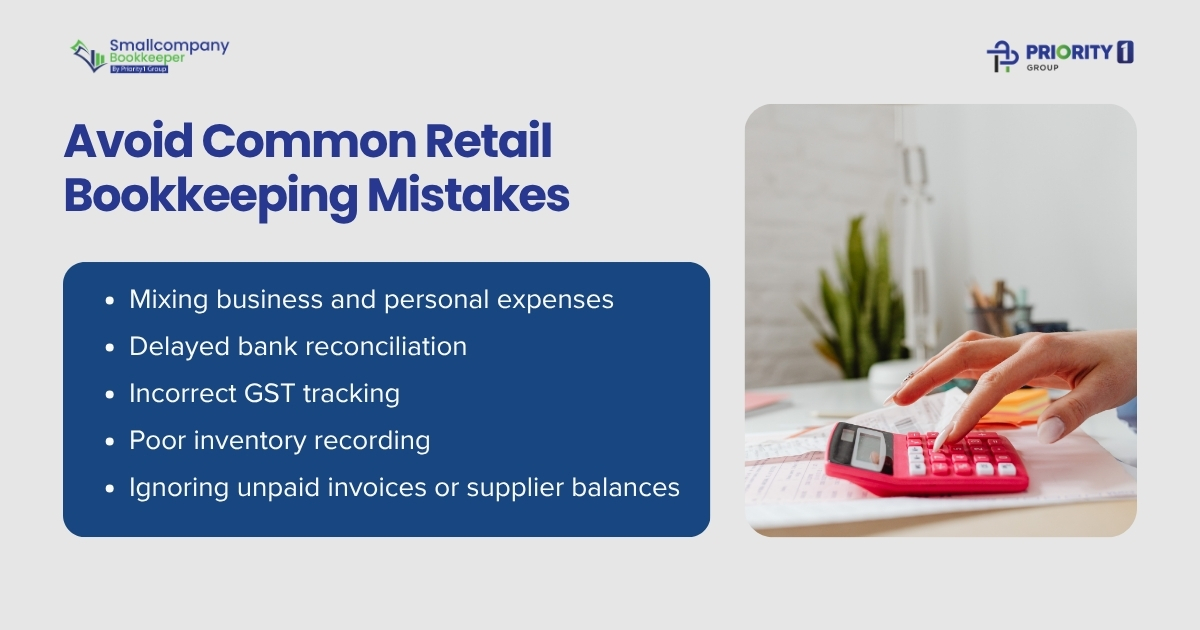
Many small retail stores face financial problems because of simple bookkeeping mistakes that build up over time.
Common issues include:
Problems like delayed reconciliation and incorrect transaction matching can quietly affect reporting accuracy. This guide on bank reconciliation for small businesses explains how these issues develop and how to avoid them.
These problems often seem minor initially, but over time they reduce financial clarity and make cash flow management harder.
A structured bookkeeping process helps reduce these risks and keeps financial information reliable.
As retail businesses grow, bookkeeping becomes more complex. More transactions, more suppliers, and larger inventory volumes increase the need for accurate systems.
This is where professional support becomes valuable.
There is a company called Priority1 Group that helps Australian small businesses improve financial organisation through structured bookkeeping systems and reporting processes. By helping businesses maintain accurate records, improve reconciliation routines, and create better financial visibility, they support stronger operational control and smarter decision-making.
Professional bookkeeping support also helps retail businesses:
Many retail businesses treat bookkeeping as a task they complete only when necessary. But businesses that use bookkeeping strategically gain a significant advantage.
When financial records are accurate and updated consistently, business owners can:
Bookkeeping becomes more than compliance – it becomes a tool that supports growth.
Retail businesses operate in fast-moving environments where small financial issues can escalate quickly if they go unnoticed. Strong bookkeeping provides visibility, structure, and confidence during both busy and slower periods.
Better financial control does not come from complexity. It comes from consistency, accurate reporting, and systems that provide clear insights into how the business is performing.
Retail bookkeeping is not just about recording sales and expenses. It is about creating financial clarity that helps small stores manage cash flow, control costs, and plan for sustainable growth.
With accurate bookkeeping systems, retail businesses can make better decisions, reduce financial stress, and stay prepared for changing business conditions.
If your store is struggling with inconsistent records or unclear cash flow, working with a team like Priority1 Group can help bring structure and visibility to your financial systems. With the right support, bookkeeping becomes less of an administrative burden and more of a practical tool for long-term business success.