

Tax time already comes with enough moving parts for small business owners. There are invoices to check, payroll records to review, BAS figures to confirm and expenses to categorise. Then, for some businesses, there is another reporting obligation that can easily sneak up in August: the Taxable Payments Annual Report, commonly known as TPAR.
TPAR is not required for every business. It applies to certain industries and is mainly designed to report payments made to contractors for specific services. If your business uses contractors regularly, especially in industries such as building, cleaning, courier work, road freight, IT or security services, this report should be on your radar well before the deadline arrives.
The good news is that TPAR becomes much easier when your bookkeeping is organised throughout the year. The difficult part is not usually lodging the report itself. The real challenge is finding accurate contractor details, confirming payment totals and checking whether the right transactions have been captured.
A Taxable Payments Annual Report tells the ATO about payments your business made to contractors for certain services during the financial year. It usually covers payments made between 1 July and 30 June and is lodged after the end of the financial year.
The report may include details such as the contractor’s name, ABN, address and the total payments made to them. Depending on the transaction, GST information may also be relevant. The purpose is to improve transparency around contractor income and help ensure that contractors are correctly reporting what they earn.
For a small business, TPAR is not just another form. It is a reminder that contractor records need to be maintained properly from the beginning. If you only start collecting the information in August, you may find yourself chasing invoices, checking bank transfers and trying to confirm details that should have been recorded months earlier.
You may need to lodge a TPAR if your business provides certain services and pays contractors or subcontractors to help deliver those services. The reporting rules commonly apply to businesses in industries such as building and construction, cleaning, courier services, road freight, information technology, and security, investigation or surveillance services.
The requirement can also apply when your business provides a mix of services. For example, if you run a company that offers IT support and you pay independent contractors to perform client work, you may need to check whether TPAR applies. The same logic can apply to cleaning companies, freight businesses and building contractors that use subcontractors.
It is important not to assume that only large businesses need to lodge. A smaller operator can still have TPAR obligations if the business activity and contractor payments fall within the rules. If you are unsure, it is better to review the arrangement early than wait until the deadline is close.
TPAR matters because it links directly to how your business records contractor payments. If contractor information is incomplete or payments are mixed into broad expense categories, the report becomes harder to prepare. This can create unnecessary pressure at the end of the financial year.
Poor records can also make your business look less organised if questions arise later. A contractor payment that appears simple in your bank feed may need supporting details, including the contractor’s ABN, invoice information and the nature of the service provided.
This is where accurate small company bookkeeping becomes valuable. A regular bookkeeping process helps you separate contractor payments from employee wages, supplier purchases and general operating expenses. It also helps keep your records cleaner for BAS, GST and other reporting requirements.
For broader compliance support, this guide on ATO compliance tips for business owners is a useful supporting read because it explains why accurate records, registrations and reporting habits matter for Australian businesses.
The best way to manage TPAR is to collect information when the contractor first starts working with your business. Waiting until August can turn a simple reporting task into a detective job.
You should usually keep details such as the contractor’s legal name, business name, ABN, address, invoice records, payment dates and total amounts paid during the financial year. If GST is included on the invoice, make sure your records capture that correctly.
Bank reconciliation also plays an important role. If a contractor payment was made in two instalments, refunded, adjusted or paid under a slightly different business name, reconciliation helps you identify and correct the issue before the report is prepared. This guide on why bank reconciliation matters explains how small errors can affect the accuracy of business records.
One common mistake is assuming that every contractor payment is easy to identify later. In reality, bank feeds can be messy. A payment description may show a trading name, a personal name or something unclear. Without proper invoice records, it may be difficult to confirm who was paid and what the payment related to.
Another mistake is mixing contractor payments with general supplier expenses. For example, a business may pay for materials, equipment and subcontractor labour during the same month. If these payments are not categorised correctly, the TPAR review can take longer than expected.
Some businesses also forget to check ABNs. If the contractor details are incomplete, you may need to chase information long after the work has been completed. This is frustrating for everyone and can delay lodgement.
Bookkeepers for Small Business can help reduce these issues by keeping supplier and contractor records organised throughout the year, rather than leaving everything to be reviewed after 30 June.
Preparing a TPAR starts with reviewing whether the rules apply to your business. Once you confirm that your business may need to lodge, review contractor payments made during the financial year and check that the relevant details are complete.
Your bookkeeping software may be able to help generate reports, depending on how transactions have been entered. This is why setup matters. If contractors are marked correctly in your system and payments are coded consistently, the report will be easier to review.
Businesses using QuickBooks or looking to improve their software setup can visit QuickBooks Bookkeeper for support with organised bookkeeping records and software-based reporting processes.
Lodgement can usually be completed through suitable business software, online services or a registered tax or BAS agent. The key is to review the report before lodging. Check contractor names, ABNs, totals and GST amounts where relevant.
TPAR is not only an annual reporting task. It should be part of a broader contractor management process. When you engage a contractor, your business should confirm their details, keep a copy of the agreement or scope of work and record each invoice properly.
This also helps with other business decisions. If contractor costs are increasing, your reports should show that clearly. If one contractor is used regularly, you may need to review whether the arrangement still makes commercial sense. If your business relies heavily on subcontractors, your cash flow planning should reflect that pattern.
Priority1 Group supports Australian small businesses with bookkeeping, payroll support and financial administration processes. With the right systems in place, contractor reporting becomes part of normal business management rather than a stressful annual clean-up.
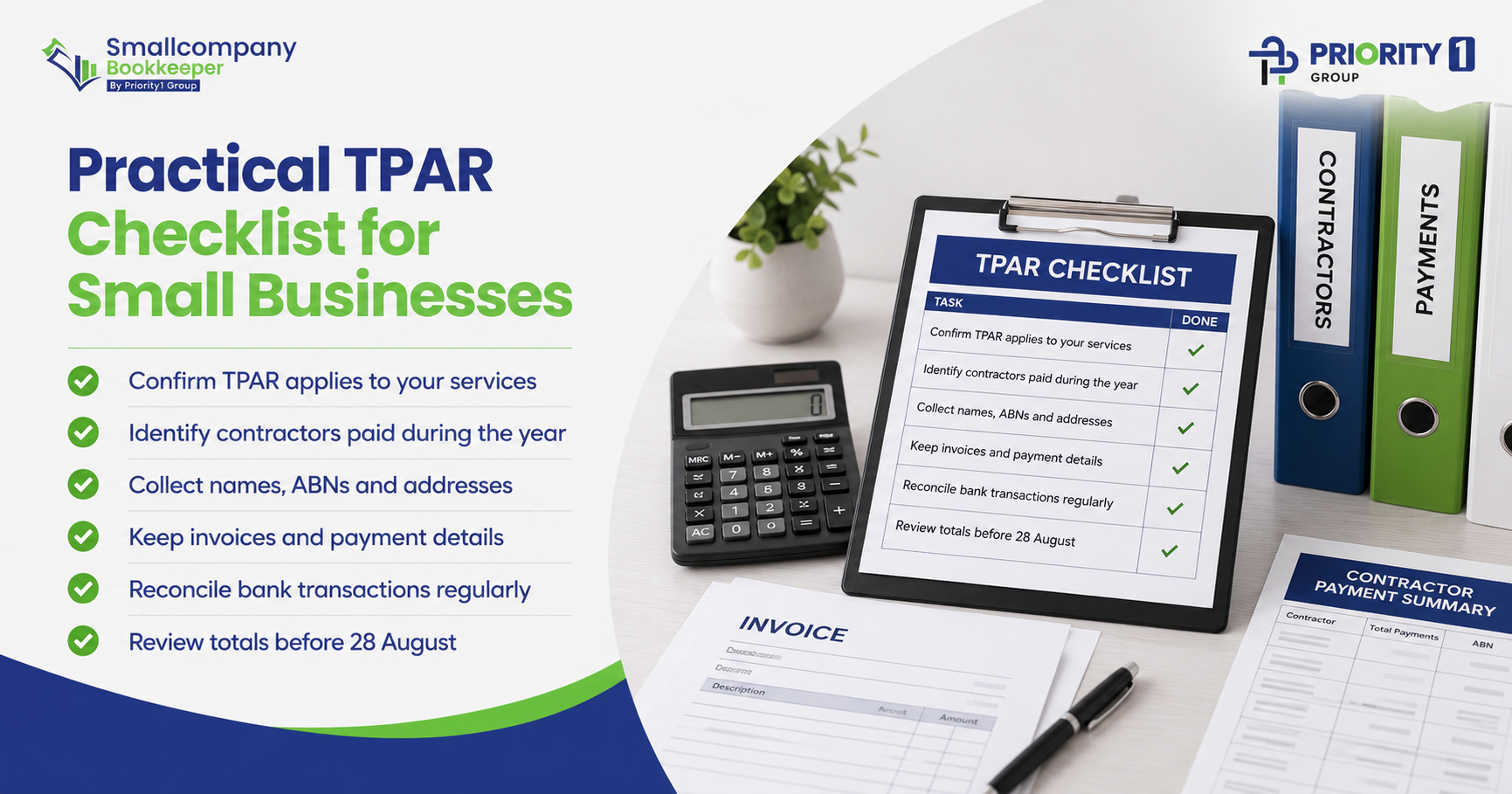
A simple checklist can help you stay prepared throughout the financial year:
This list does not replace professional advice, but it gives your business a practical starting point. The earlier you build the habit, the easier TPAR becomes.
TPAR can feel confusing at first, but the core idea is simple: certain businesses need to report payments made to contractors for specific services. The challenge is making sure your records are accurate enough to prepare the report without rushing through months of transactions.
If your business operates in a reportable industry and uses contractors, do not leave TPAR preparation until August. Collect contractor details early, reconcile payments regularly and keep your bookkeeping system organised throughout the year.
Priority1 Group helps Australian small businesses maintain clearer bookkeeping records, manage contractor payment information and reduce the stress of recurring reporting obligations. With the right support and a consistent process, TPAR becomes another manageable part of running a compliant business.