

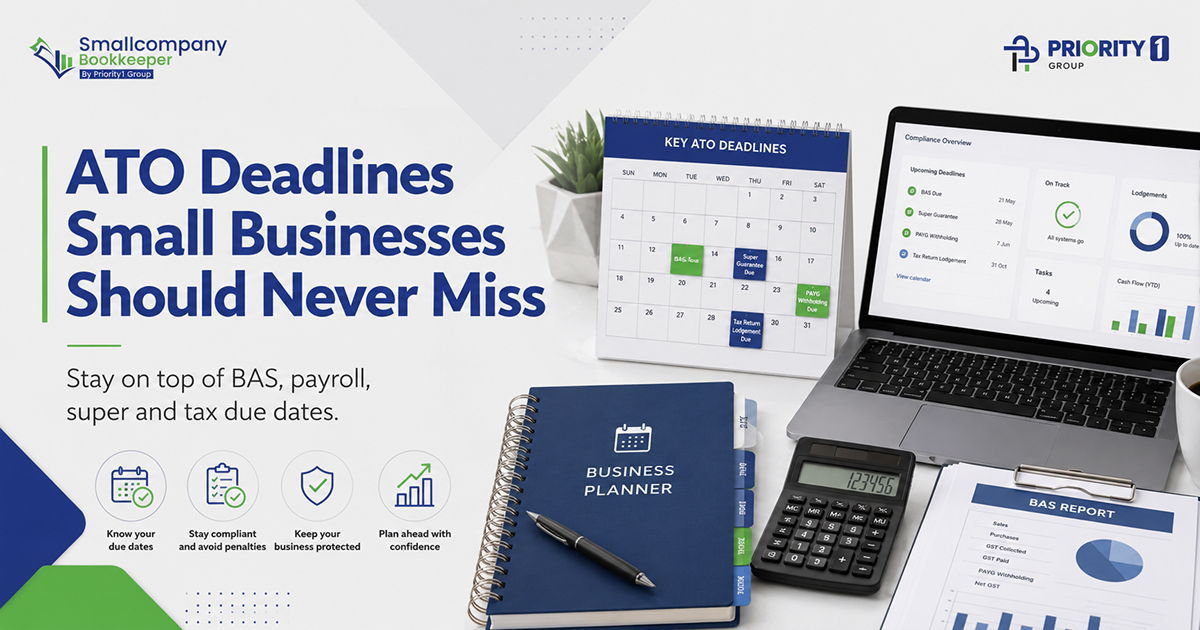
Managing a small business can feel like keeping several plates spinning at once. You need to look after customers, monitor sales, manage suppliers, support employees and keep daily operations moving. With so many priorities competing for your attention, it is easy for an important Australian Taxation Office deadline to slip quietly into the background.
The problem is that ATO deadlines rarely disappear when they are ignored. A missed date can lead to unnecessary stress, rushed record reviews, potential penalties and added pressure on your cash flow. The solution is not to memorise every rule. Instead, create a simple compliance calendar and build bookkeeping routines that help you prepare well before each deadline arrives.
The obligations that apply to your business will depend on its structure, GST registration, payroll arrangements and industry. Still, several key dates deserve a permanent place in every small business owner’s calendar.
For many Australian small businesses, the Business Activity Statement is one of the most important recurring obligations. A BAS may include GST, PAYG withholding, PAYG instalments and other amounts depending on your circumstances.
The lodgement frequency can vary. Some businesses submit a BAS monthly, while others report quarterly. A monthly BAS is generally due on the 21st day of the month following the reporting period. For example, the BAS for August is generally due on 21 September.
The standard quarterly BAS schedule is:
Reporting Period | Standard Due Date |
July to September | 28 October |
October to December | 28 February |
January to March | 28 April |
April to June | 28 July |
Your specific deadline may vary in certain situations, particularly when you use a registered agent or the due date falls on a weekend or public holiday. Always check the date shown for your business rather than relying only on a general calendar.
BAS preparation becomes much easier when your transactions are recorded consistently throughout the quarter. Leaving everything until the final week can turn a manageable task into a stressful clean-up exercise. For a practical overview, read this guide on getting GST right throughout the year.
If your business employs staff, you may need to withhold tax from their wages and report those amounts to the ATO. PAYG withholding deadlines depend on the size of your withholding obligations. Many small businesses report quarterly through their BAS, while businesses with higher withholding amounts may need to report more frequently.
The deadline itself is only one part of the process. Payroll records need to be accurate before the reporting date arrives. Employee details, wages, allowances, deductions, leave and withholding amounts should be reviewed regularly. A small error repeated across several pay runs can become a much larger reconciliation problem later.
Reliable Small company bookkeeping helps prevent this situation. When payroll and transaction records are maintained throughout the reporting period, you are less likely to face a last-minute rush or spend hours trying to trace missing information.
Single Touch Payroll, usually shortened to STP, requires employers to report payroll information to the ATO on or before payday. This includes wages and PAYG withholding details. It is not a task to leave until the end of the month.
Employers also need to complete an annual STP finalisation declaration by 14 July. This step confirms the payroll information for the financial year so employees can access the correct details when preparing their tax returns.
Treat STP like a regular health check for your payroll system. If you review information as each pay run is completed, problems are generally easier to correct. If you wait until July to examine an entire year of payroll records, even a small discrepancy can feel like searching for one missing piece in a large jigsaw puzzle.
Superannuation deserves special attention because the process is changing. Under the existing quarterly system, super guarantee contributions for the April to June 2026 quarter are due by 28 July 2026.
From 1 July 2026, Payday Super begins. Employers will need to pay super guarantee contributions in line with their payroll cycle rather than relying on quarterly payments. This means a business that pays employees fortnightly will also need to manage super contributions on that schedule.
The shift may require changes to cash flow planning and payroll processes. Waiting until the new rules begin could create avoidable pressure, especially for businesses that have traditionally set aside super funds gradually during each quarter.
This is where organised systems matter. Priority1 Group supports Australian businesses with structured bookkeeping, payroll assistance and financial administration processes. A consistent routine can make it easier to manage recurring obligations without allowing them to disrupt day-to-day operations.
Some businesses need to lodge a Taxable Payments Annual Report, commonly known as a TPAR. This report provides information about certain payments made to contractors. It can apply to businesses operating in industries such as building and construction, cleaning, courier services, road freight, information technology, security, investigation and surveillance.
The TPAR deadline is 28 August each year. Even though this is an annual obligation, preparation should not begin in August. Contractor records need to be maintained throughout the year, including Australian Business Numbers, payment amounts and relevant supplier details.
This is one area where Bookkeepers for Small Business can add real value. Keeping contractor information organised from the beginning can reduce the time required to prepare reports and lower the risk of missing important details.
Income tax return deadlines vary depending on your business structure and how you lodge. Sole traders, partnerships and trusts lodging their own returns generally need to do so by 31 October. Companies may have different deadlines, while registered tax agents often work under separate lodgement programs.
A bookkeeper does not replace a registered tax agent, but accurate bookkeeping makes tax-time preparation far more efficient. Your invoices, expenses, bank reconciliations and supporting records should already be in order before your tax agent begins reviewing the information.
Digital tools can help simplify this process when they are set up correctly and used consistently. Businesses seeking software-specific assistance can explore QuickBooks Bookkeeper for support with maintaining accurate records and managing routine bookkeeping tasks.
Meeting deadlines is much easier when your business records are complete and accessible. In most cases, business records need to be retained for at least five years. These records may include invoices, receipts, payroll documentation, bank statements and information supporting the figures reported to the ATO.
Do not treat record keeping as a storage task that happens after the real work is finished. It is part of running the business. A simple weekly routine can prevent a backlog from building up and help you identify missing documents while they are still easy to locate.
Digital systems can reduce paperwork, but they still require oversight. Automation may import a transaction, yet it cannot always determine whether the coding is correct or whether a receipt is missing. Technology works best when it supports a reliable process rather than replacing one.
A practical monthly routine may include reviewing bank transactions, checking unpaid invoices, entering supplier bills, reconciling accounts, reviewing payroll records and setting aside funds for upcoming obligations. For additional guidance, read these practical ATO compliance tips for business owners.
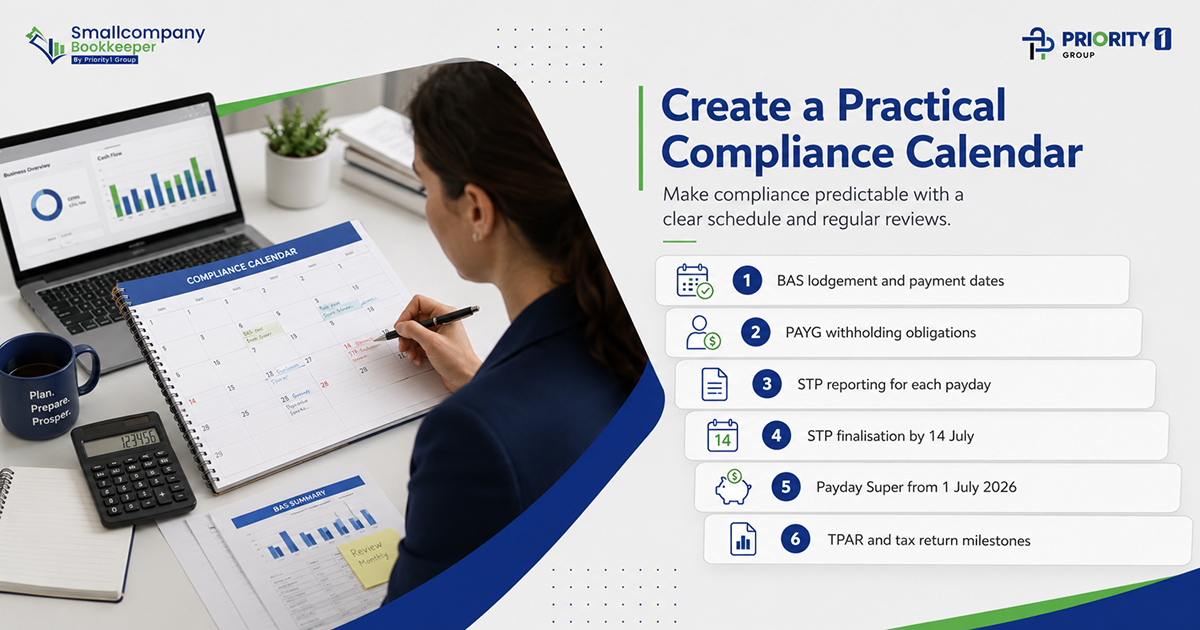
A compliance calendar gives your business a safety net. Begin by listing the obligations that apply to your business, then work backwards from each official deadline. Instead of scheduling BAS preparation on the due date, allow time for reconciliation and review in advance.
Your calendar may include:
The purpose of this calendar is not to create more administration. It is to make compliance predictable. When important tasks are visible, you can plan for them rather than reacting when they become urgent.
ATO deadlines do not need to feel overwhelming. The key is to maintain accurate records, review your obligations regularly and build preparation time into your calendar. A steady bookkeeping routine makes it easier to manage BAS, payroll, superannuation and annual reporting without allowing compliance tasks to derail your week.
Priority1 Group helps Australian small businesses improve their bookkeeping processes, maintain clearer records and reduce the pressure created by recurring financial administration. With reliable support behind the scenes, you can focus more energy on customers, growth and the future of your business.