
Managing finances is often the most challenging aspect of running a small business. As your business grows, it becomes more difficult to keep track of every dollar and ensure you’re in control of your financial health. This is where MYOB bookkeeping can truly make a difference.
MYOB is an excellent tool for small businesses to help streamline bookkeeping tasks, improve financial visibility, and ensure that your business remains compliant with local regulations. In this blog, we’ll cover some practical MYOB bookkeeping tips for small businesses that want better financial control, making sure that your financial processes are structured, accurate, and insightful.
When you’re running a small business, bookkeeping may seem like just another administrative task. However, small company bookkeeping is essential to managing cash flow, tax compliance, and decision-making.
Clean, organised financial records allow you to:
Without proper bookkeeping, you risk making uninformed decisions, which could negatively impact your bottom line. Whether you’re using MYOB or another tool, setting up an effective bookkeeping system is the foundation of long-term financial health for your business.
MYOB is one of the most popular bookkeeping platforms for small businesses in Australia, and for good reason. It’s easy to use, highly flexible, and offers a variety of tools to help businesses streamline their accounting tasks.
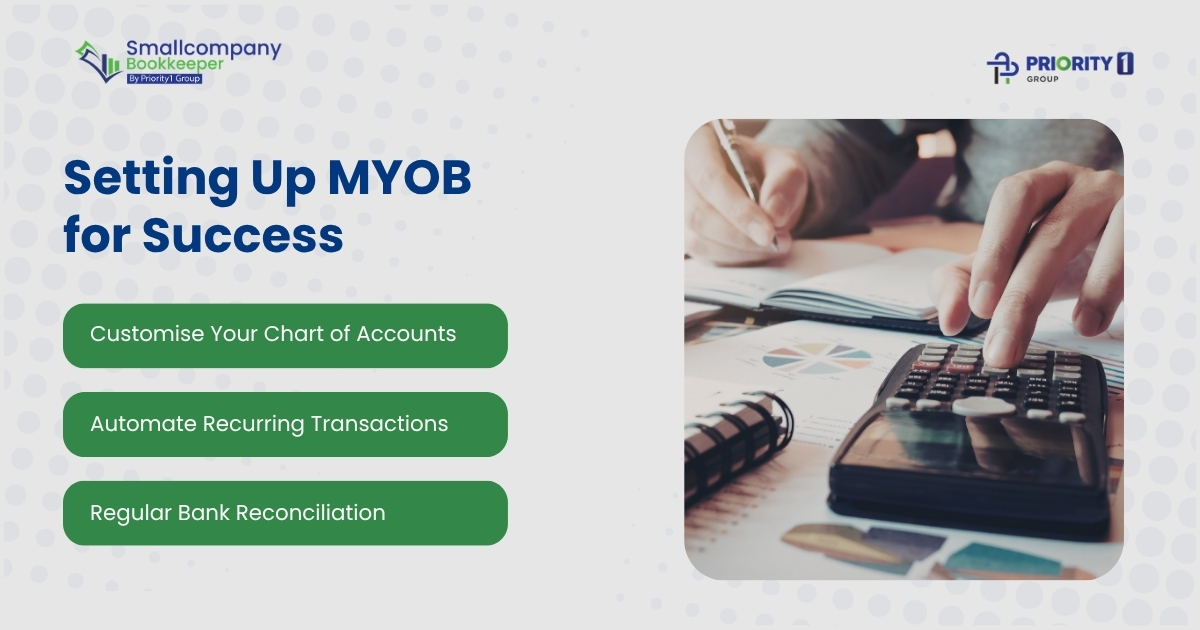
Your chart of accounts is the backbone of your financial records. In MYOB, it’s essential to set up an accurate and relevant chart of accounts that reflects your business needs. Make sure you categorise your income, expenses, assets, and liabilities correctly so that your reports are both detailed and useful.
MYOB allows you to set up recurring transactions for regular payments like rent, subscriptions, and salaries. This automation saves you time and reduces the risk of missing any payments. It also ensures that your books are updated in real-time, keeping your financial data always accurate.
One of the most common mistakes in bookkeeping is failing to reconcile your bank accounts regularly. MYOB simplifies this process by allowing you to import your bank transactions directly, making reconciliation faster and more accurate. It’s crucial to reconcile your accounts monthly to ensure there are no discrepancies in your financial records.
If you’re unfamiliar with the reconciliation process or need further guidance, check out this guide on bank reconciliation for small businesses to help streamline the process.
One of the main reasons MYOB is so beneficial for small businesses is its ability to improve financial visibility. MYOB provides businesses with accurate, real-time financial data, helping you keep track of cash flow, income, expenses, and profitability at all times.
Here are a few ways MYOB helps with financial control:
MYOB offers real-time reporting, which means that as soon as transactions are recorded, they are reflected in your reports. This allows you to access up-to-date data on your financial position at any moment, making it easier to make informed decisions.
MYOB is designed to help small businesses stay tax-compliant. It calculates GST and PAYG tax automatically, reducing the chances of errors that could lead to penalties. It also helps you prepare and lodge your BAS (Business Activity Statement) on time, which is a huge relief at tax time.
MYOB also helps you manage your business’s financial future by offering budgeting and forecasting tools. These tools allow you to set goals, track performance, and make adjustments to your financial strategies in real-time. By staying ahead of potential financial issues, you can make smarter business decisions.
While MYOB is a powerful tool, many small businesses find that they need professional assistance to get the most out of their software. This is where bookkeepers for small business can make a significant difference.
A professional bookkeeper can help you:
If you’re looking for expert support in managing your MYOB account, consider working with MYOB Bookkeepers. They offer expert advice and support for small businesses, helping you make the most of MYOB’s features.
Managing your own bookkeeping can be overwhelming, especially as your business grows. While DIY bookkeeping may seem like a cost-effective solution in the short term, it can quickly lead to errors, missed opportunities, and unnecessary stress.
This is where outsourced bookkeeping comes into play. Many small businesses find it more efficient and cost-effective to outsource their bookkeeping tasks. Outsourcing frees up your time so that you can focus on running your business, while professionals handle the day-to-day financial tasks.
For businesses looking to scale efficiently, outsourcing bookkeeping offers multiple benefits:
If you’re interested in seeing how outsourcing can benefit your small business, check out Priority1 Group’s outsourced bookkeeping services, which provides expert support to help businesses maintain financial control and compliance.
MYOB bookkeeping can help small businesses stay on track with their finances, ensuring tax compliance and reducing the risk of financial errors. By automating tasks like recurring transactions, providing real-time reports, and helping businesses manage cash flow, MYOB is a great tool for any small business owner looking to improve financial control.
However, even with powerful tools like MYOB, many small businesses benefit from professional support. Priority1 Group helps businesses optimise their MYOB systems, ensuring accuracy, consistency, and better financial management.
By using MYOB efficiently and working with experienced bookkeepers, you can achieve financial clarity, stay compliant with taxes, and focus more on growing your business.